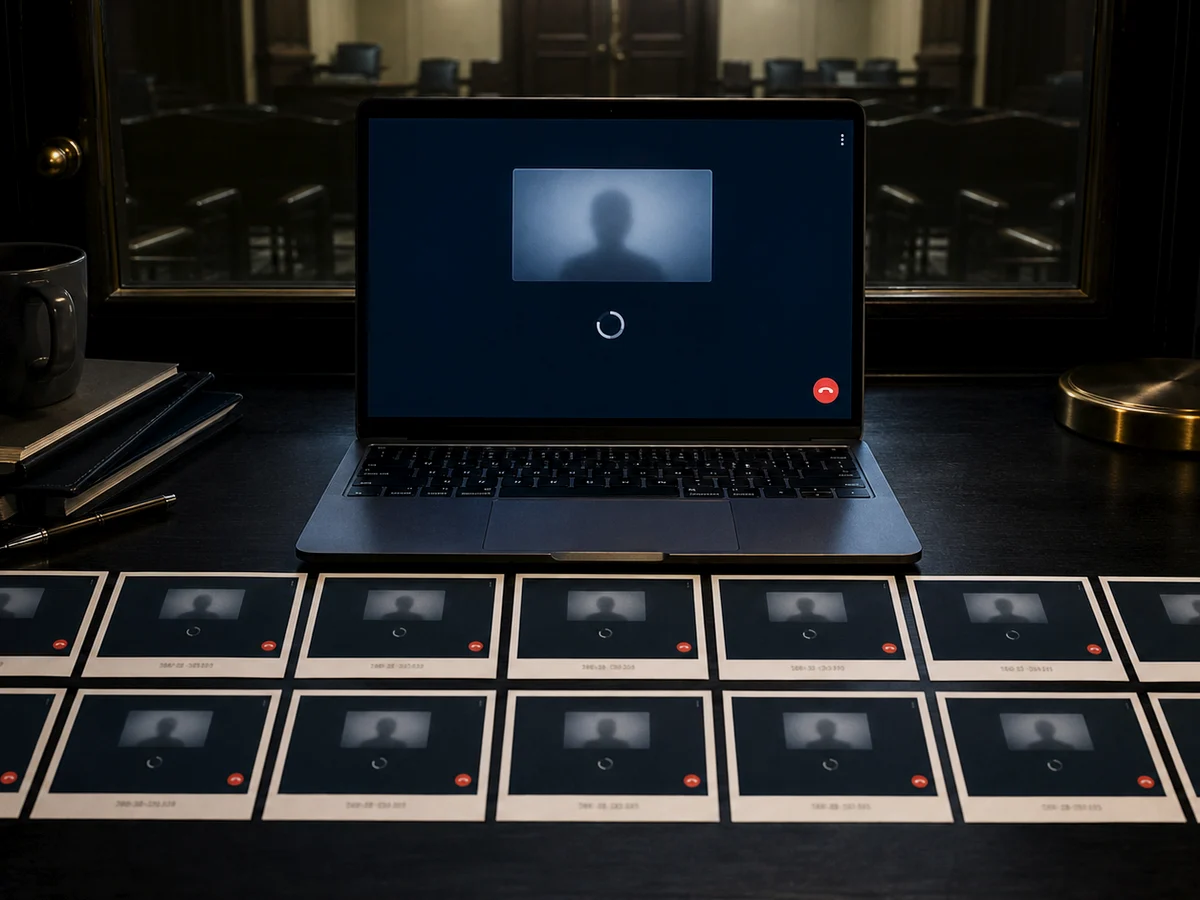
What the Record Establishes
- Fourteen timestamped screenshots place the litigant connected at 9:18 a.m. and still waiting at 10:45.
- The case was called at 9:43 while he remained in the waiting room.
- He was removed at 11:00 without ever being admitted.
What They Have Not Produced
- The court-side Zoom host telemetry for Courtroom T-611, June 17, 9:00–11:00 a.m.
- Every host admit and remove action, with the account that performed it.
- What occurred on the record during the 102 minutes he was held outside.
Fourteen time-stamped screenshots destroy the “failed to appear” narrative before it starts. They place the litigant at the courthouse’s own virtual threshold — connected at 9:18 a.m., still waiting when the case was called at 9:43, still waiting at 10:45 while the hearing proceeded inside, ejected at 11:00 without ever being admitted. A person who fails to appear is absent. This person was present for 102 minutes, on the court’s own platform, photographing the door the court never opened.
The evidence the court controls
A court-hosted Zoom room logs everything: join times, waiting-room states, every host admit and remove action, session termination. The Nineteenth Judicial Circuit is the account holder. Producing the host-side telemetry for Courtroom T-611, June 17, 9:00–11:00 a.m., would settle in one export whether admission was attempted, refused, or never tried. That export has been demanded on the record. It has not been produced.
What proceeded behind the door
While the screenshots accumulated, an order lifting the stay on a 180-day custodial term was signed — the order this archive traces separately as a pocket warrant, invisible on the public docket until the next morning. The waiting room and the order are one event: the person the order targeted was locked outside the proceeding that produced it. The filings call that ex parte. The telemetry will call it what it is.